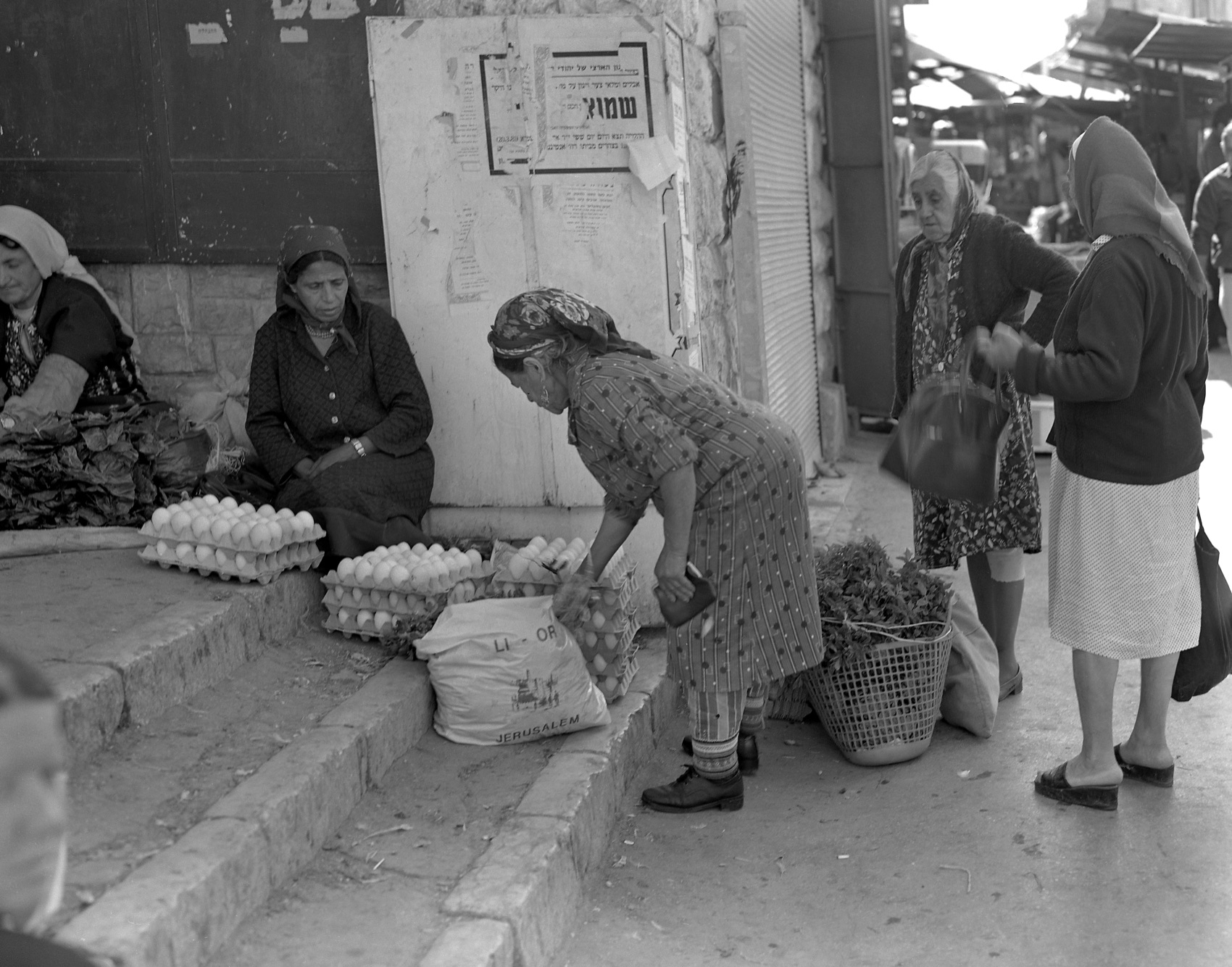
Why this archive exists
Jerusalem's Mahane Yehuda is one of the most visited markets in the country. Its history survives, but scattered across hundreds of places and connected nowhere. This project gathers it into one record, while the market that made it is still standing.
The market has been here, in one form or another, since the 1870s, before it even carried the name Mahane Yehuda. In the century and a half since, it has held many thousands of lives. Families who ran a single stall for three generations. Greengrocers and butchers and spice sellers and porters. Buildings that went up, changed hands, burned, and got rebuilt. A whole working world, most of it now gone, and almost none of it written down in any one place.
That last part is the problem this project exists to solve.
The record already exists, in pieces
The history of this market is not lost. It survives, scattered across an enormous number of places, in records made for every reason except remembering it.
Several hundred sources, and the number keeps climbing. The material is genuinely out there. But it sits in archives that don't talk to each other, in papers nobody outside a university ever reads, in digitized collections you can only find if you already know they exist, and in the inboxes and shoeboxes of people who have no idea that what they are holding is a missing piece.
A newspaper ad on its own is a scrap of trivia. A census line on its own is a name you'll never think about again. Their value was always in how they connect, and those connections were never made.
What the project does
It gathers the scattered pieces into one place and links them together.
Every source gets read, translated if it needs it, and logged for what it actually says. Then the slow work begins, which is joining one piece to another. A name on a census turns up in a phone book, at an address that sits on a parcel I can find on a map, running a shop that appears in a newspaper ad a decade later.
Yaakov Bechar, fifty, a hosiery seller, his wife Esther beside him, and eight children under one roof, in a house recorded as Beit Ashurar. One line of a ledger names all ten of them, and the archive can already pin them to a real plot in the market, a place you could walk over and stand on today.
Do that across hundreds of sources and thousands of names, and a pile of disconnected scraps becomes a picture of a real place: who was here, where they stood, what they sold, and when. So far that means a few thousand people, more than a thousand businesses, and a growing web of the links between them. It grows every week.
I want this to work as two things at once, an archive built on documents and a record of living memory, because the papers only ever captured part of the picture and the rest is still in people's heads.
Why it has to happen now
The market this archive is about is already slipping away from the one people love today, and the gap is about to widen fast.
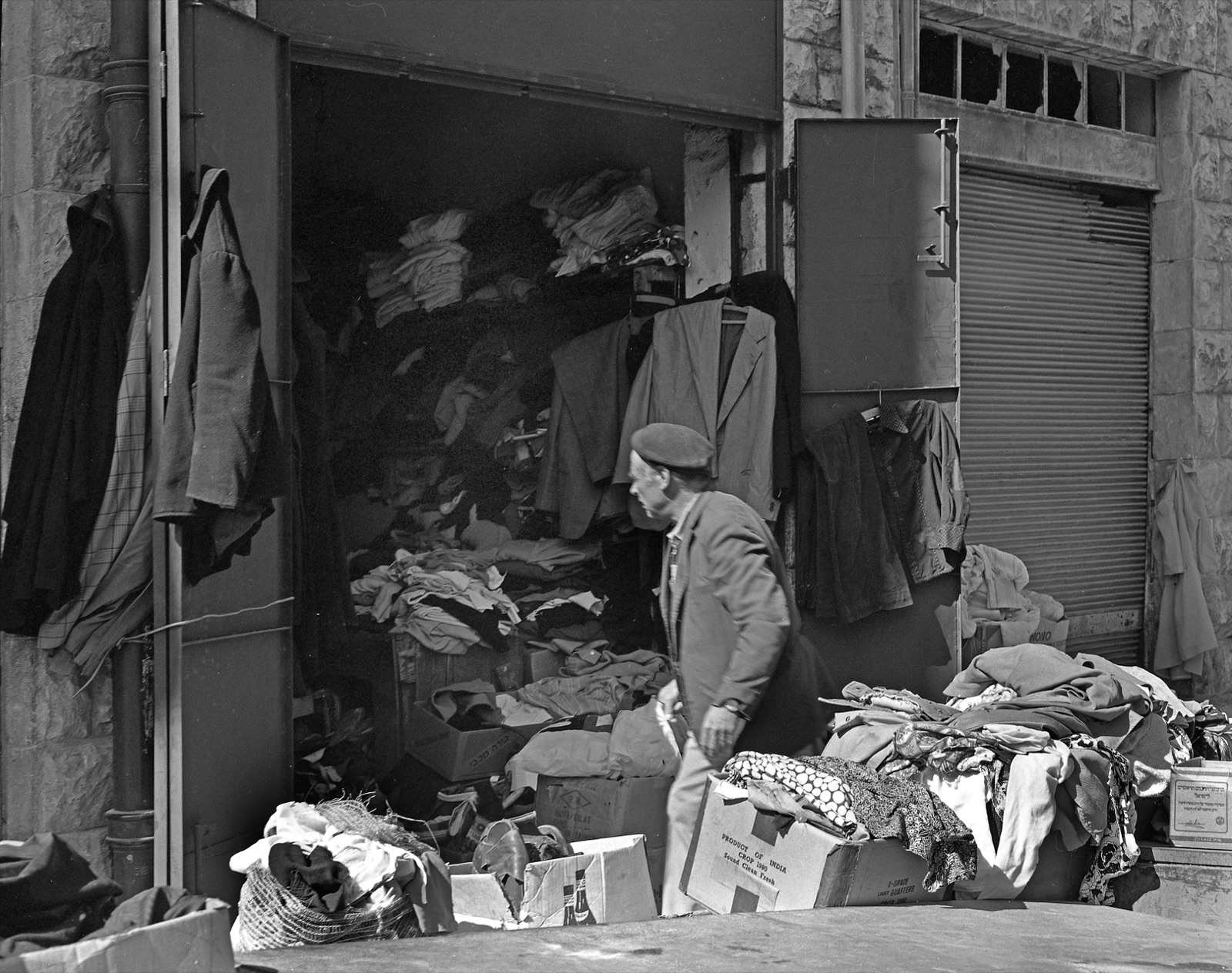
The plan is already in motion. The Jerusalem Municipality and the Tourism Ministry are putting 54 million shekels into the shuk between now and 2028, with the Jerusalem Development Authority running it on the ground. They will deep-clean the stone, clear what the plan calls "visual nuisances," plant vertical gardens, and replace the patchwork of homemade tarps, signs, and lighting the merchants put up themselves with a single designed canopy and one "architectural language."
Half of that money goes underground, into water, drainage, and electricity the market genuinely needs. The other half goes into the look of the place, and that is the half worth worrying about.
Around the market, something like two thousand luxury apartments are planned or already rising, in towers of thirty and forty storeys, and the rents underneath them are climbing with the skyline. Slowly, the ownership of the shuk is drifting off the stalls and up into the institutions and the developers.
The character of this market was never designed. It grew from below, in a few hundred different hands, none of them working from a master copy, and that is exactly the kind of thing a renovation smooths away without meaning to. Once the hand-painted signs and the old arrangements are gone, they don't come back under nicer lighting. The people who remember how it worked are getting older, and the documents in private hands get thrown out by relatives who don't know what they are looking at.
The window is closing. This material can be gathered and connected now, while the market that made it is still standing and the people who lived it are still here. Wait longer, and the authentic history of one of Jerusalem's most important places keeps thinning out until only the postcard version is left.
Why it's finally possible
There is a second reason this is happening now, and it is a more hopeful one.
A huge amount of this material has been digitized in the last few years. The National Library of Israel and archives like it have put enormous collections online, things that used to mean a trip to a reading room and a day of squinting at microfilm. For the first time, hundreds of these sources are reachable from one desk.
At the same time, the tools for working with that much material have changed. AI can move through a volume of documents that no single person could ever hold in their head, and it can surface the connections between them, the same name turning up in two places, the same address across thirty years. It does not invent anything. Every link still rests on a real document. What it does is let one person do the joining-up that used to take a research team.
That combination is what made me think this was even doable, and honestly what got me started. Without it, this project could not exist. The material was always out there. What was missing was any way for one person to gather it and connect it, and that is the part that has finally changed.
How you can help
This is a one-person project, and it gets better every time someone brings a piece I didn't have.
If you know someone with a connection to the market, a family that worked there or an old-timer with stories, send this their way.
Old photographs, papers, anything tied to a shop or a family in the market. And if you carry stories, from your own life or passed down, I want those too.
You can see the sources I'm already working from. If you know of a collection, an article, or an archive that isn't there, I'd love to hear about it.
If there is someone I should sit down and record, a former shopkeeper or a family that goes back generations, help me find them.
I'm looking for funding to take this further. If you can help, or know who I should be talking to, please get in touch.
Gathered, not generated. A market's history pulled back into one place, before it thins away.
The Mahane Yehuda Archive · place × time → who was here